What PDR protects.
Every panel on your car left the factory with paint applied and cured under conditions no body shop can reproduce. It is thinner, harder and more uniform than anything sprayed afterward. Once that finish is sanded off, it is gone.
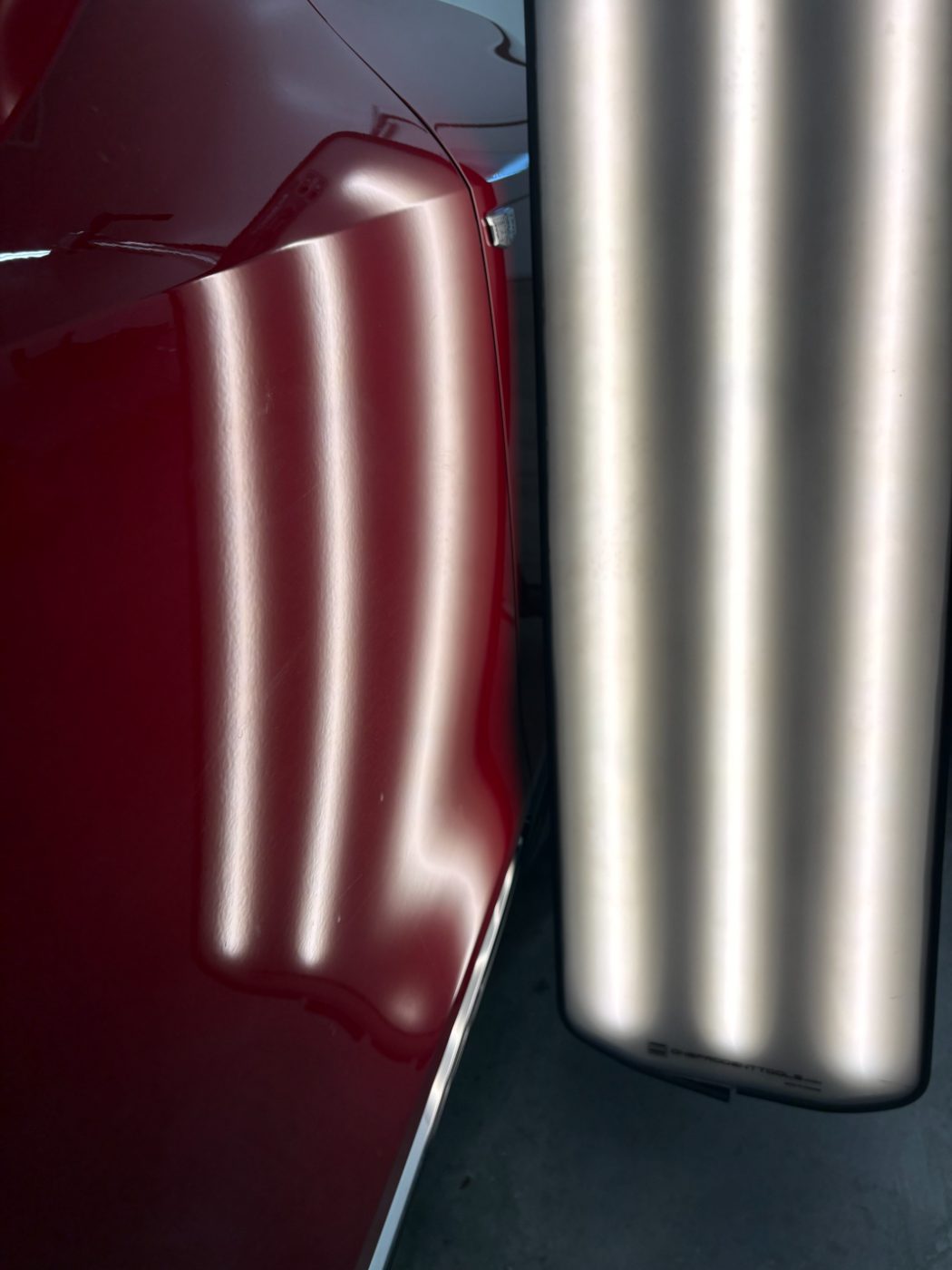
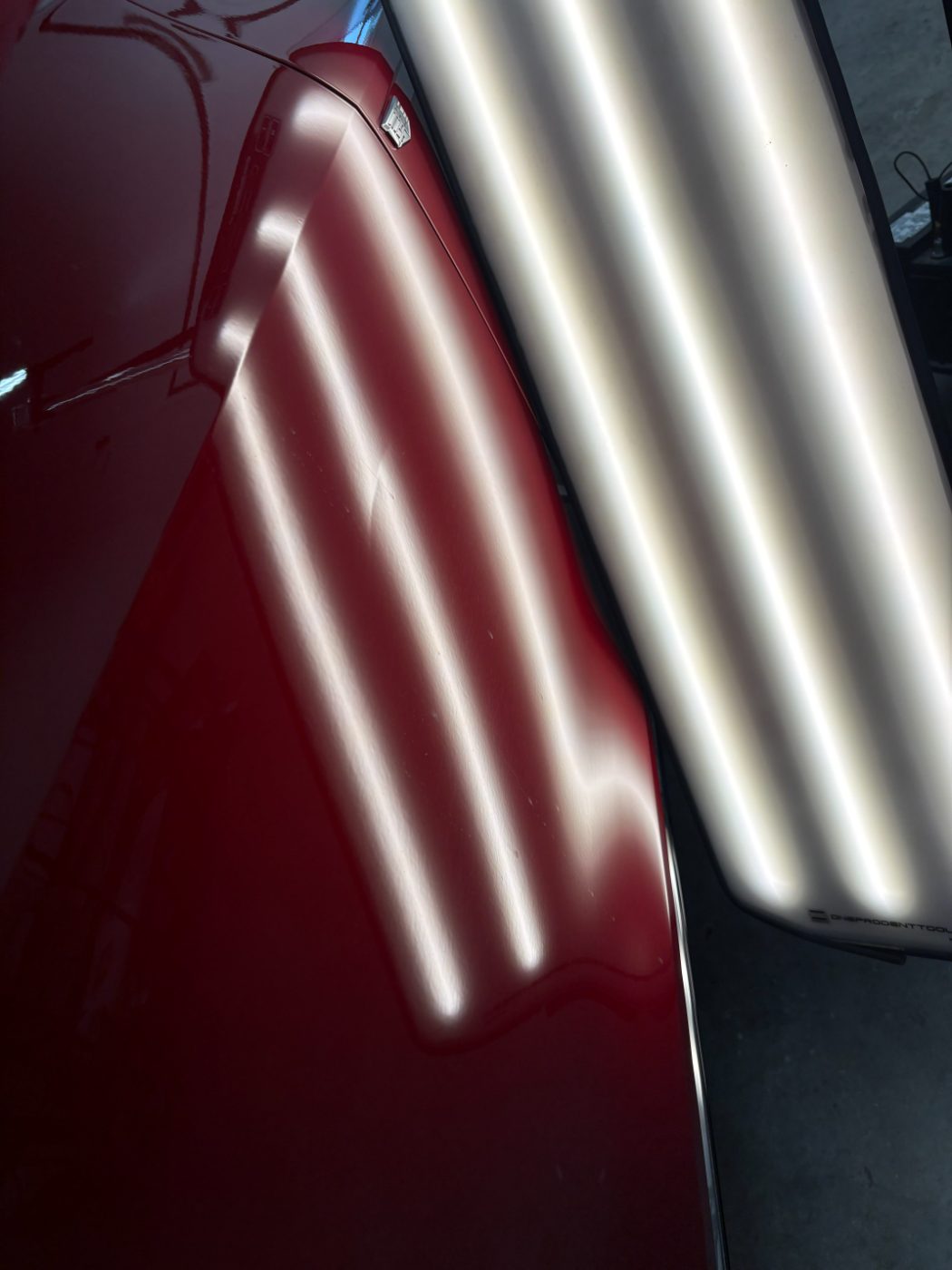
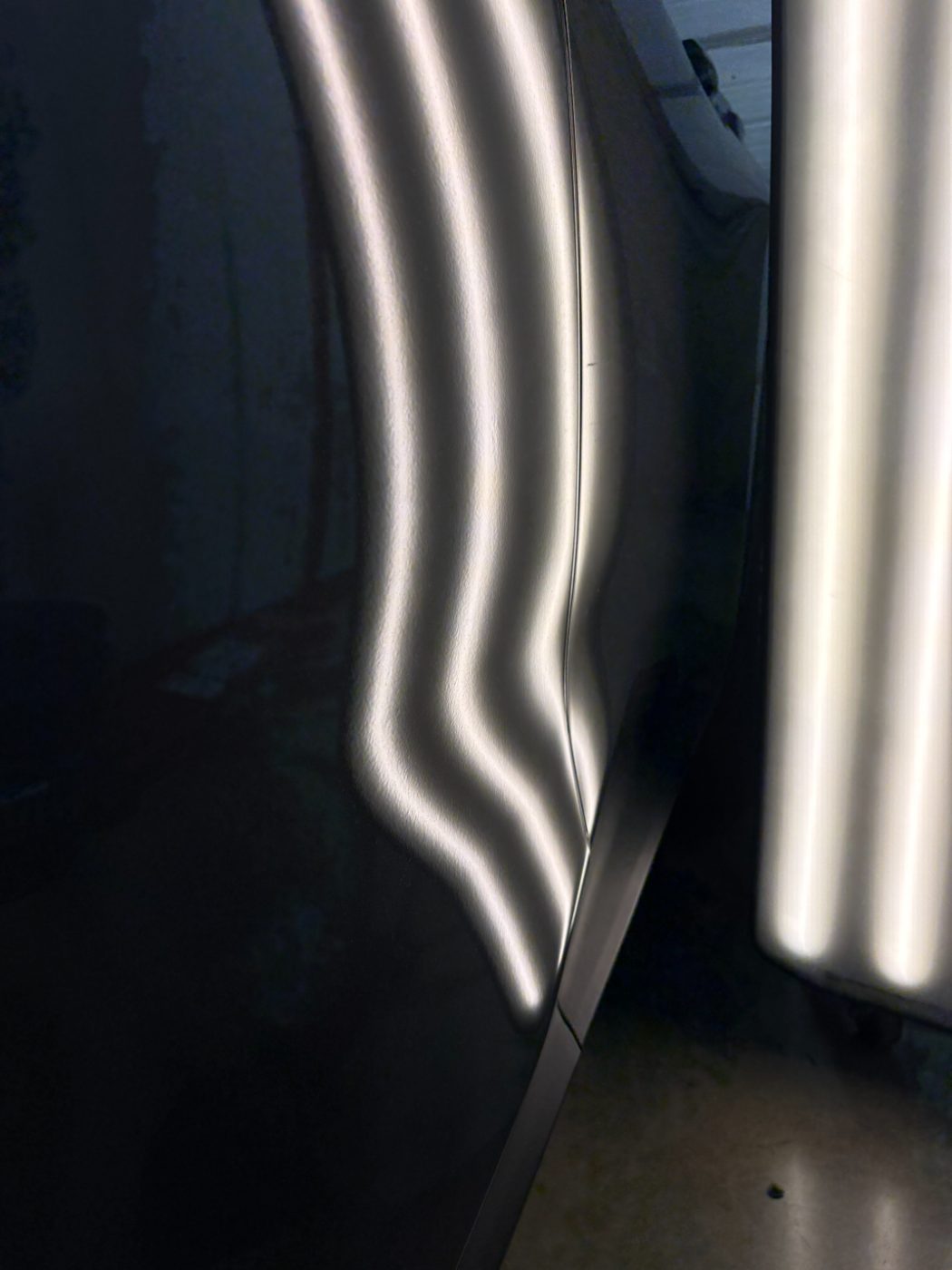
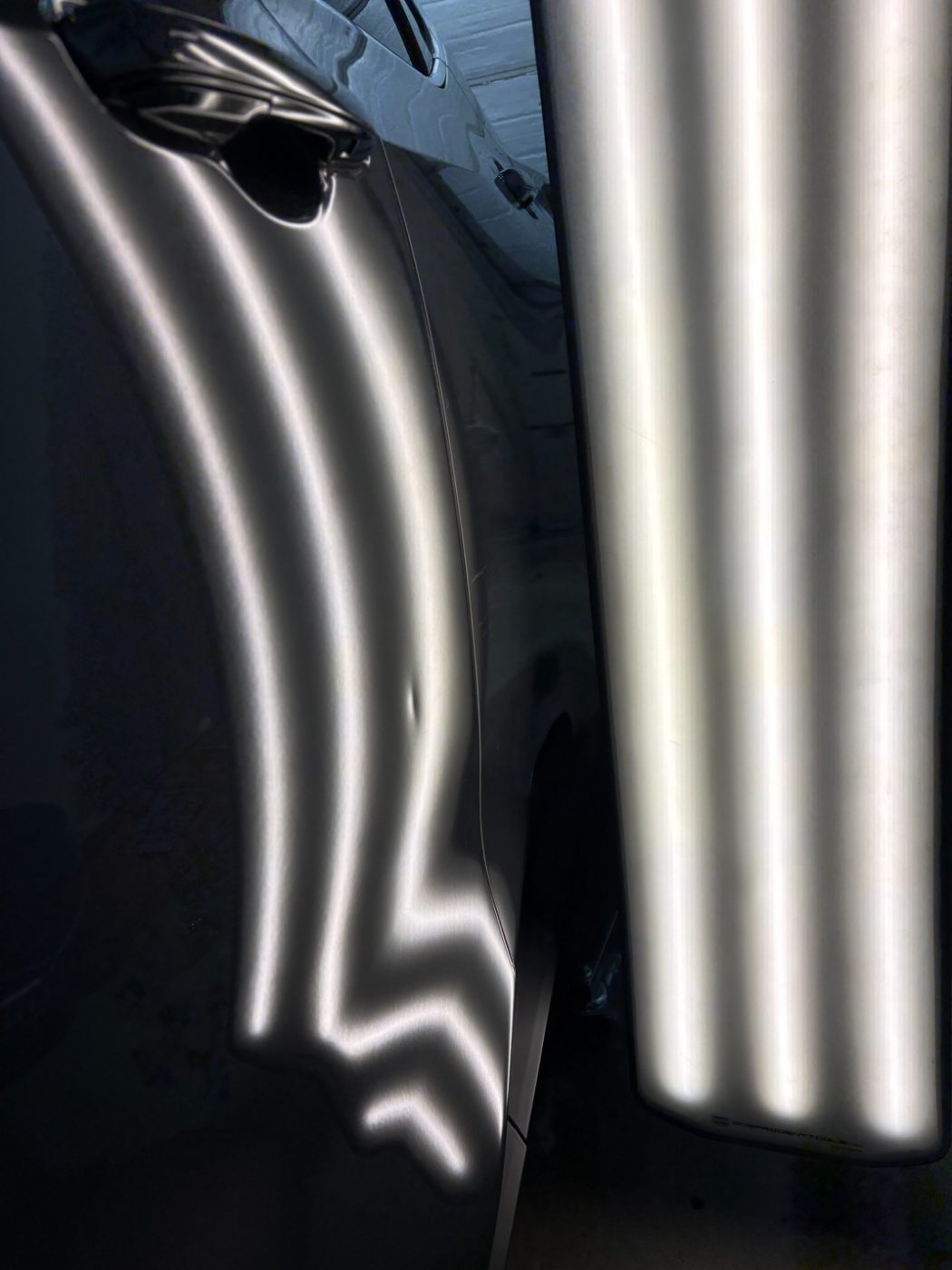
Paintless dent repair works the metal from behind with rods and picks, reading the panel through a reflection board, moving the low spot back a fraction at a time until the lines run straight again. The finish is never touched. That means:
- Your resale value stays intact. A repainted panel shows up at trade-in and on a vehicle history report. A PDR repair does not.
- No color-match risk. The panel is still wearing the paint it was born with, so there is nothing to match.
- Faster and cheaper. No filler, no primer, no booth time, no cure time.
- No overspray, no tape lines, no soft edges on the panels next to the repair.
Door dings, hail, and creases are three different jobs
Door dings are the easy case: a single shallow dent, usually on a door skin, usually an hour or two. Bring it by and we will often do it while you wait.
Hail is volume work. The individual dents are shallow but there can be two hundred of them across the horizontal panels. It is slower, it is priced by panel and dent count, and it is almost always an insurance claim. That is covered on the hail repair page.
Creases are the hard case. A long dent that runs across a body line has stretched the metal, and stretched metal fights back. Some creases come out clean with PDR. Some come out ninety percent and still need a skim and a blend. We will tell you which one yours is after we look at it, not after we have started.
When PDR is not the answer
This is the part most shops leave off their website. PDR is not right for every dent, and pretending otherwise costs you money.
- Broken or cracked paint. Pulling the dent does not fix the paint, and bare metal rusts. The panel needs conventional repair and refinishing.
- Dents on a panel edge or body line seam where there is no access from behind and the metal is doubled over.
- Severely stretched metal from a sharp impact, where the panel will never fully return to shape.
- Panels with prior filler. Filler does not move the way metal does, so working it from behind does nothing useful.
When one of these is the case, we say so and quote the conventional repair instead. That work happens in the same building.
 No repaint