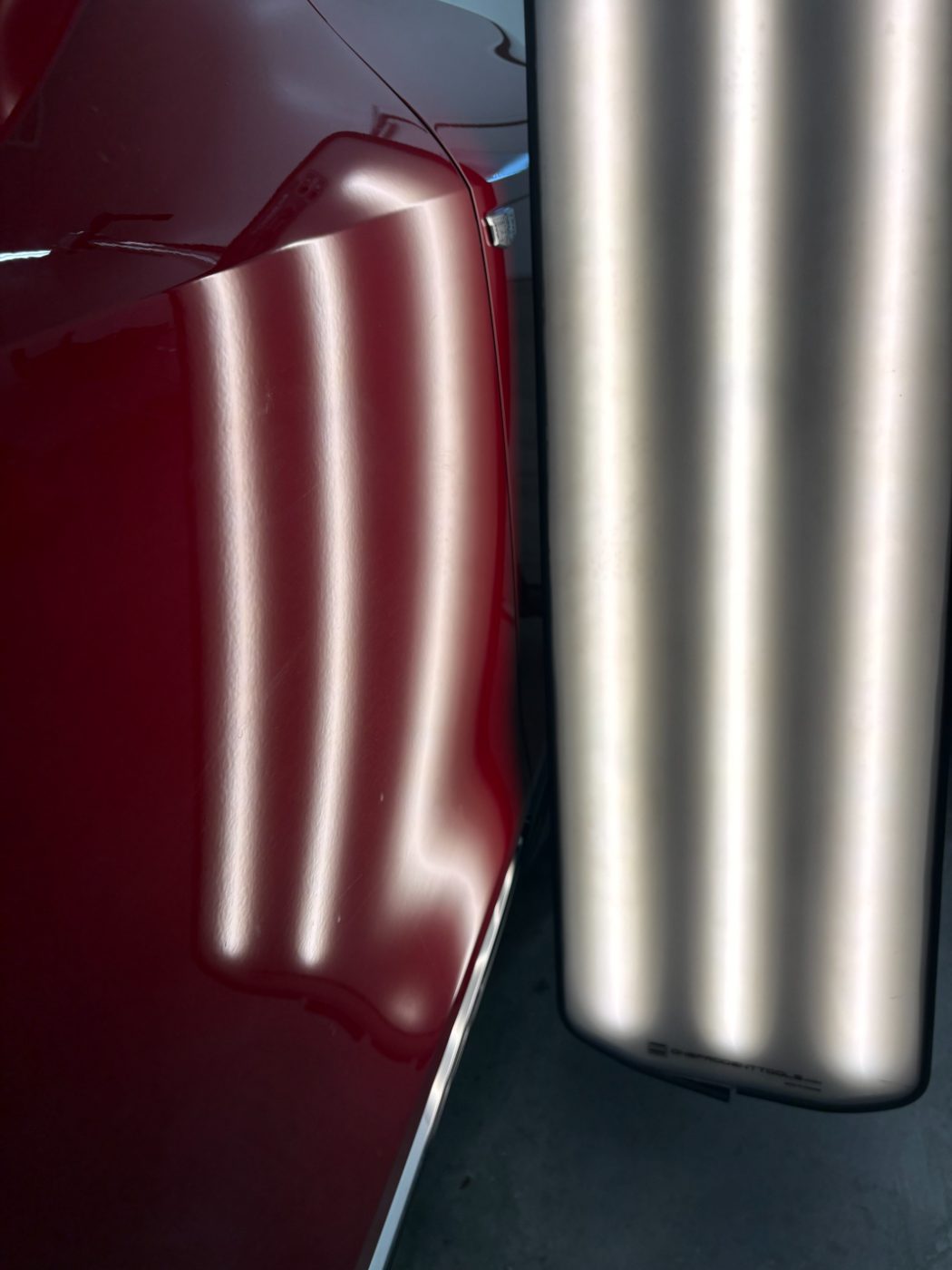
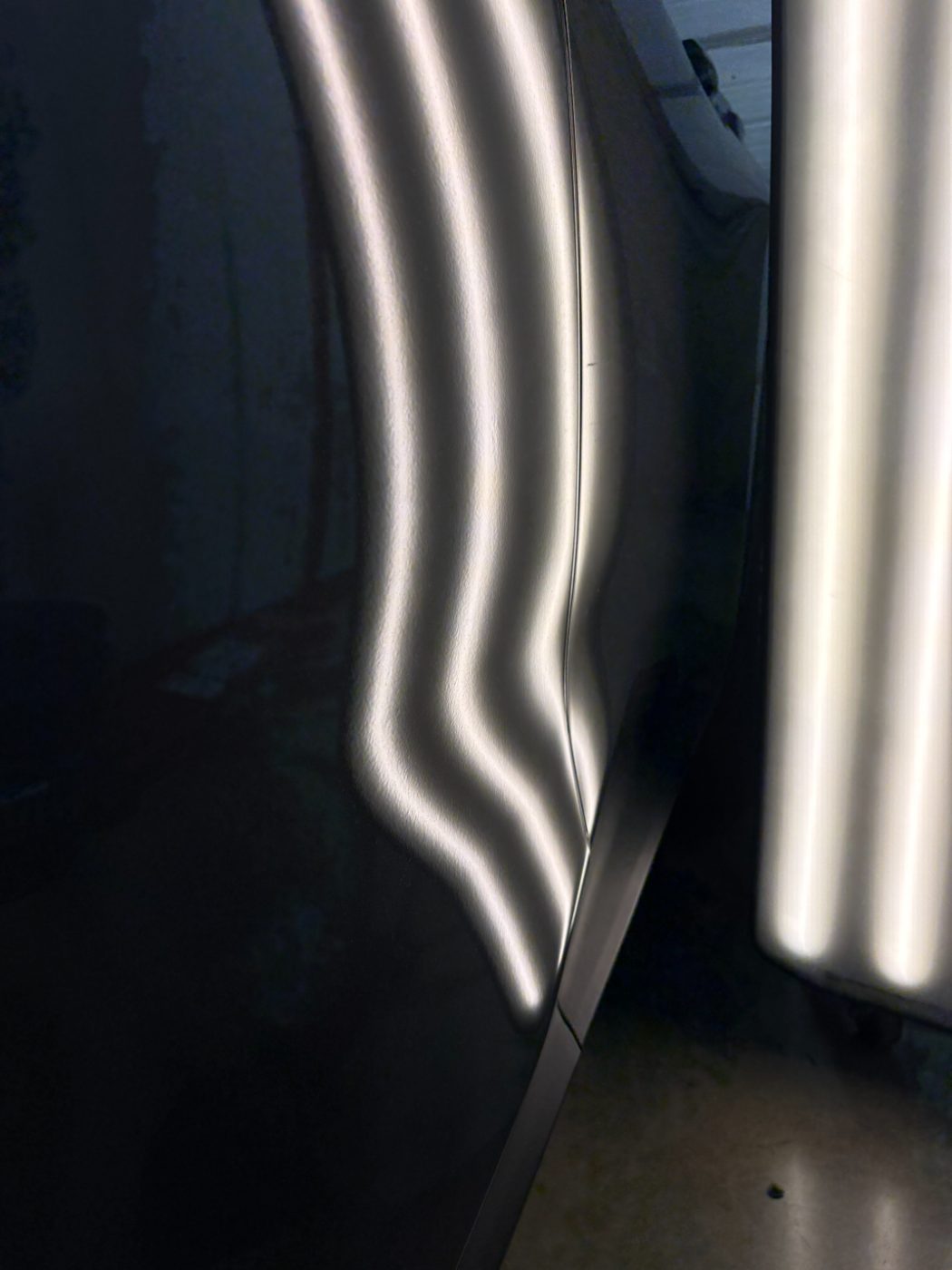
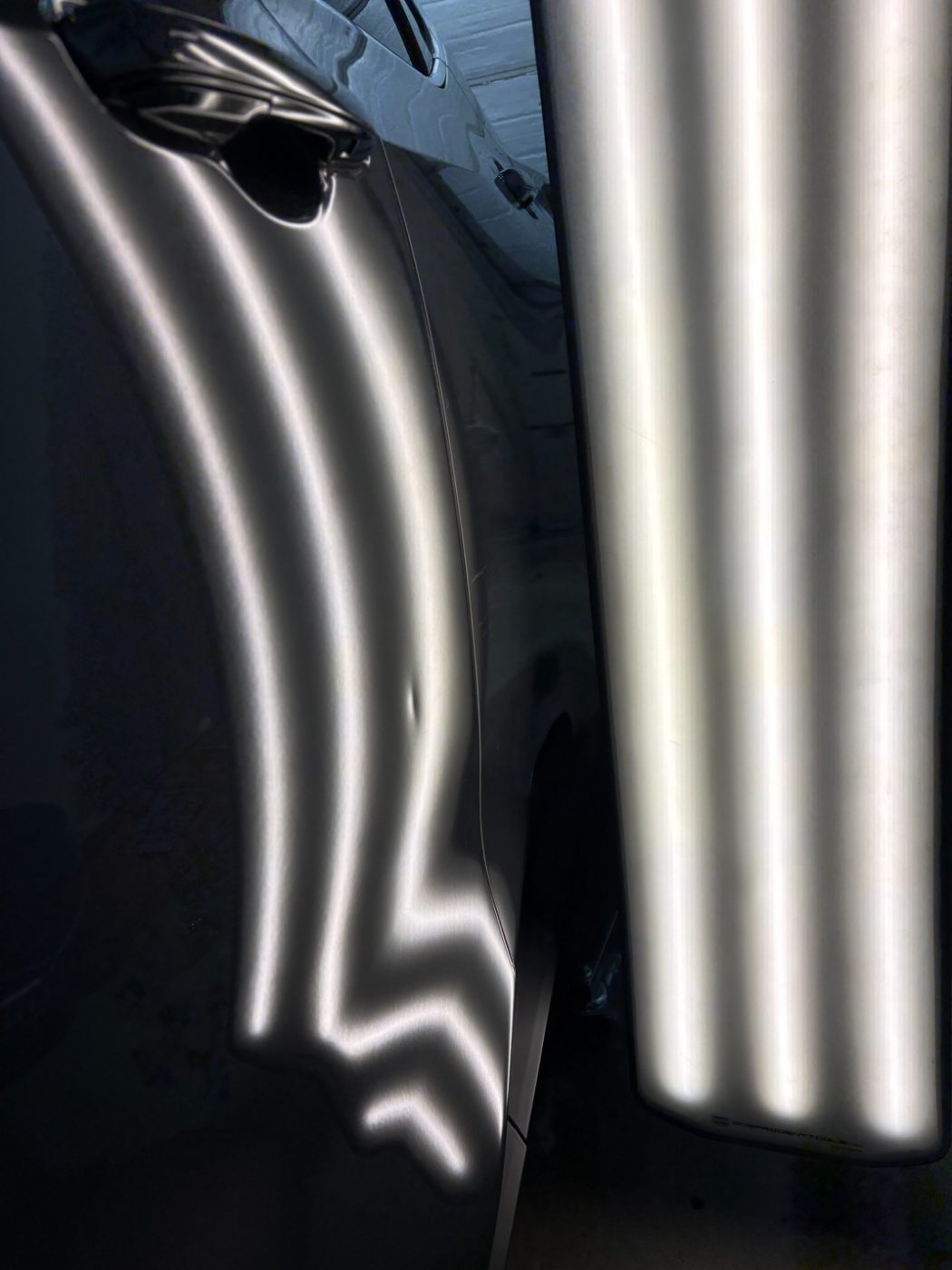
What hail actually does to a car.
Hail dents are shallow, round, and there are a lot of them. A moderate storm can leave two hundred dents across a hood, roof and deck lid. The paint is usually unbroken, which is the important part: it means the metal can be moved back without touching the finish.
Severe hail is different. Once stones break paint, crack glass, or crease a panel edge, the repair moves beyond dent work and into bodywork and refinishing. Most cars we see need a mix of both, and knowing where the line sits is most of the skill.
PDR first, conventional where it is needed
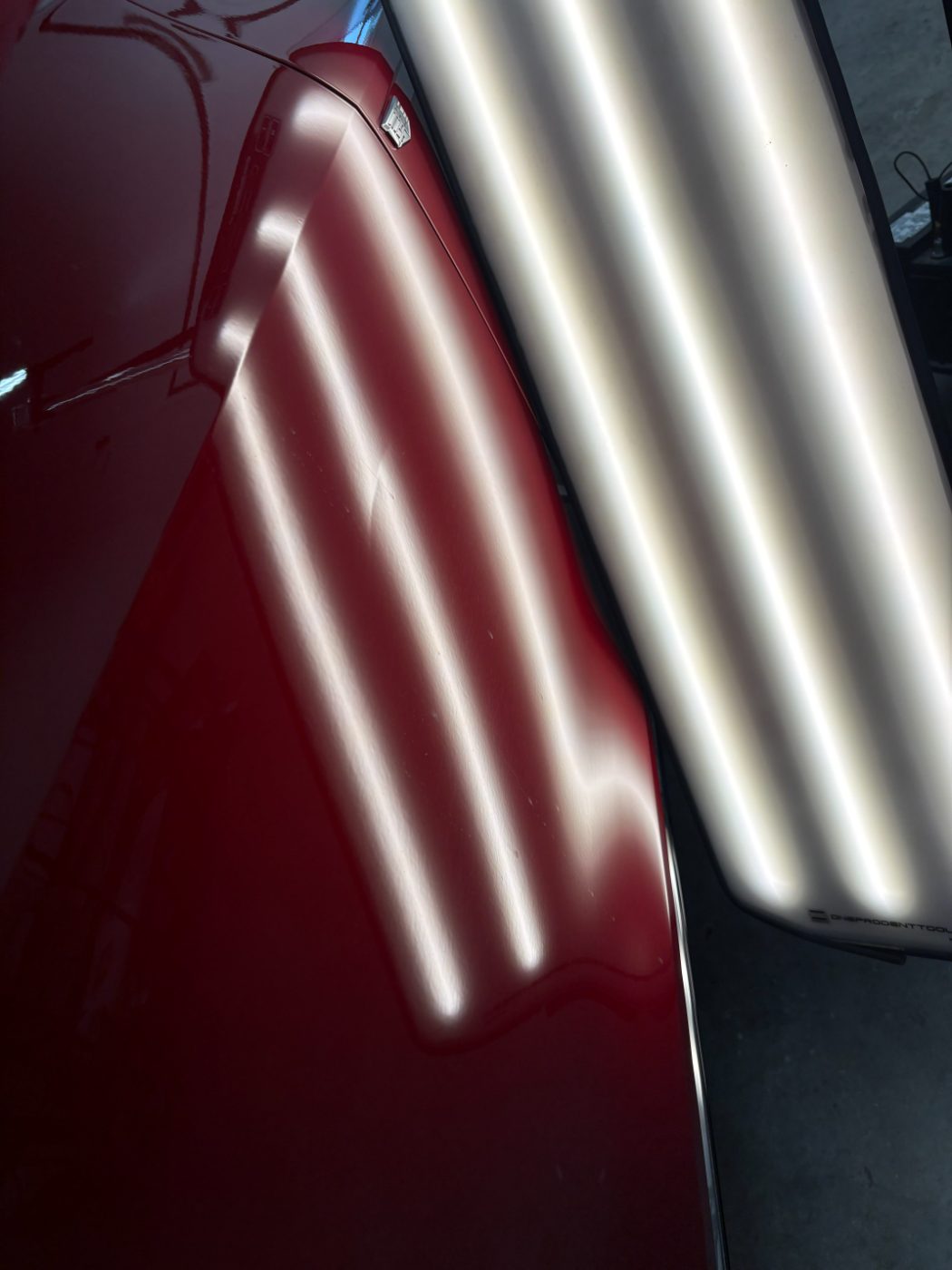
Paintless dent repair works the metal back from behind the panel with specialized tools. No filler, no sanding, no repaint. Your factory paint stays on the car, which protects the finish and the resale value. A repainted panel shows up on a vehicle history report and at trade-in.
Where PDR cannot reach, or where the paint is broken, we do it the conventional way: panel repair or replacement, color-matched refinishing, and blending into the adjacent panels so the repair does not announce itself. Both happen in-house at the Plano shop, so nothing gets subcontracted out and nothing gets lost between shops.
- Aluminum panels hold dents differently than steel and need a slower hand. We work them too.
- Roof and deck lid hail is the most common and usually the most PDR-friendly.
- Broken paint or cracked glass means conventional repair or replacement. We will tell you which parts of your car fall into which bucket before you commit.
More on the method itself on our paintless dent repair page. If the storm also put you into something, that is collision repair.
 Free Evaluation